
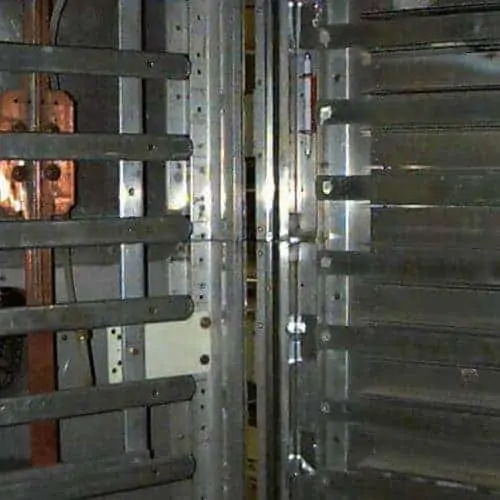
Expert RF Heating Engineering Consulting Services
RF Heating Engineering Consulting is one of the core competencies for SiberSci, LLC, and SiberSci, LLC provides clients with services for optimizing the performance of existing RF Heating circuits, as well as providing research, design, development, and optimization of new hardware for optimally processing client defined materials:
- RF Heating and Drying Hardware at 6.78 MHz, 13.56 MHz, 27.12 MHz, and 40.68 MHz.
- RF Devices, Circuits, Assemblies, Subsystems, and Systems for RF Heating Applications.
- RF Power Combiners and Splitters.
- RF RLC, Parallel Plate, and Strayfield Resonators for RF Heating Applications.
- RF Filters for RF Heating Applications.
- Solid-State and Vacuum Tube RF Power Amplifiers and Oscillators for RF Heating Applications.
- RF Impedance Matching Circuits for RF Heating Applications.
- RF Transmission Line Networks.
- 1Coaxial, Rectangular, and Ridged Waveguide.
- 2Planar Microstrip and Stripline Circuits.
- Frequency and Thermally Dependent RF Material Properties.
Contact SiberSci, LLC to start work on your RF Heating Engineering Consulting project.
Expert RF Heating Engineering Consulting Services
RF Heating Engineering applications include induction eddy current heating of metals and heating of materials that exhibit ionic conduction, which permits these materials to be heated by the friction created when ions are moving through the material with the material immersed in a uniform electromagnetic field. Ionic conduction heating is commonly used to cure the emulsion on x-ray film, to assist with drying large volumes of grains, defrosting meats quickly for commercial kitchens, and processing an assortment of foods. RF Heating Engineering applications consist of equipment built for the specific volume of material to be heated, so contact SiberSci, LLC today to get started with your custom design project.
Hence, SiberSci, LLC is an experienced RF Heating Engineering Consultant resource providing RF Heating, RF Drying, RF Consulting, and RF Heating Consulting resources for both continuous flow and batch processing of ionic materials. These materials include solids, films, powders, and liquids. SiberSci, LLC provides Induction Heating Consulting for induction heating applications including metals and plasmas.
Furthermore, SiberSci, LLC provides services for the theoretical analysis, design, development, fabrication, testing, validation, and optimization of RF Heating systems for laboratory and industrial applications. Our experience allows us to review the pertinent material properties, client-defined temperature specifications for a defined volume and mass of material, and time constraints for heating this defined volume and mass of material. Our expert design review permits SiberSci, LLC to recommend one or more RF hardware configurations to satisfy these requirements.
Next, SiberSci, LLC can also review proprietary material specifications for this design effort using a Non-Disclosure Agreement (NDA) to protect the client’s business-sensitive information, Intellectual Property (IP), or Proprietary Data (PD) for this process or material. Performance and physical limitations for RF Heating concepts are documented during the review process. Modifications to the concepts are documented to illustrate how each concept must be adapted to satisfy the client's requirements for a specific material. If some portion of the client-defined performance specification is found to be physically impossible to achieve, then these problem areas are revealed. We also provide recommendations to circumvent these barriers to achieving the requisite performance.
RF Heating Engineering Computational ElectroMagnetics (CEM)
Also, SiberSci, LLC is experienced using Ansys HFSS as part of the Ansys Electronics Workbench, CST Microwave Studio, FEKO, Comsol, SONNET Software, and Keysight ADS and Genesys to support the Computational ElectroMagnetics (CEM) aspects of these programs. Clients can specify the use of one or more of these CEM tools for their project as long as the client provides a valid license for using the code, or pays for contract access to the code of choice. If the client is unable to select the appropriate CEM code for their project, then SiberSci, LLC is prepared to assist each client with selecting the appropriate CEM code(s) to ensure the success of their project.
The accuracy of CEM simulations for RF circuits is directly dependent upon the frequency and temperature-dependent properties of the materials used for building each circuit. For the metals and dielectrics, these frequency and temperature-dependent material properties (thermal conductivity, complex permittivity, loss tangent, electrical conductivity, density, specific heat,…) must be used to accurately simulate the circuits.
Finally, material properties must be accurately measured to be included in the CEM simulations. Laboratory and contract resources are available to determine these material properties, which are essential for providing accurate CEM simulations of circuits and systems. SiberSci, LLC provides each client with the capability to only use valid material properties for their CEM simulations.
Electromagnetic Engineering Consulting Services offered:
- Antenna Engineering - https://sibersci.com/antenna-engineering/
- Microwave Engineering - https://sibersci.com/microwave-engineering/
- Microwave Heating Engineering - https://sibersci.com/microwave-heating-engineering/
- Millimeter-Wave Engineering - https://sibersci.com/millimeter-wave-engineering/
- RF Engineering - https://sibersci.com/rf-engineering/
- RF Heating Engineering - https://sibersci.com/rf-heating-engineering/
- RF and Microwave Safety - https://sibersci.com/rf-and-microwave-safety/
- Do not hesitate to ask if you need help solving a problem.
Electromagnetic Engineering Calculators offered:
- Circular Waveguide Calculator - https://sibersci.com/circular-waveguide-calculator/
- Coax TEM Mode Calculator - https://sibersci.com/coax-tem-mode-calculator/
- Dielectric Heating Calculator - https://sibersci.com/dielectric-heating-calculator/
- Rectangular Waveguide TEm,n Calculator - https://sibersci.com/rectangular-waveguide-temn-calculator/
- Rectangular Waveguide TMm,n Calculator - https://sibersci.com/rectangular-waveguide-tmmn-calculator/
- Skin Depth Calculator - https://sibersci.com/skin-depth-calculator/
- Wavelength Calculator - https://sibersci.com/wavelength-calculator/
Contact Us To Start Work On Your RF Heating Engineering Consulting Project Today!
In conclusion, please submit an inquiry for an RF Heating Engineering Consulting project to Dr. Scott Best, and clearly specify if a Non-Disclosure Agreement (NDA) is required to protect business-sensitive information, Intellectual Property (IP), or Proprietary Data (PD). SiberSci, LLC will provide an NDA for review, negotiation, and amendment by the client to safeguard and protect their IP and PD. SiberSci, LLC will also provide a budgetary quotation and schedule for performing the client-defined RF Consulting effort after reviewing the performance and size requirements. Work on the RF Heating Engineering Consulting project commences when a contract has been negotiated and legally executed by SiberSci, LLC and the client.
RF Heating Engineering FAQ
FAQ
What RF heating engineering services does SiberSci, LLC provide?
SiberSci, LLC provides RF heating engineering consulting for two kinds of work: troubleshooting and optimizing existing RF heating systems, and the research, design, development, fabrication, testing, validation and optimization of new RF heating hardware for laboratory and industrial applications. Services cover the full RF chain, including:
- RF heating and drying hardware at 6.78, 13.56, 27.12 and 40.68 MHz
- Solid-state and vacuum tube RF power amplifiers and oscillators
- RLC, parallel plate and Strayfield resonators (applicators)
- RF impedance matching circuits, filters, power combiners and splitters
- Transmission line networks — coaxial, rectangular and ridged waveguide, microstrip and stripline
- Frequency- and temperature-dependent RF material properties
What frequencies are used for industrial RF heating?
Industrial RF heating equipment normally operates in the ISM (Industrial, Scientific and Medical) bands, which are set aside for non-communication uses such as heating. SiberSci designs RF heating hardware at 6.78 MHz, 13.56 MHz, 27.12 MHz, and 40.68 MHz. In the United States, ISM equipment is regulated under FCC Part 18. The best frequency for a project depends on the material's dielectric properties, the size of the load, the required heating uniformity and the available power hardware.
How does RF heating work?
RF heating converts radio-frequency electromagnetic energy directly into heat inside the material, rather than conducting heat in from the surface. Two mechanisms are most common:
- Ionic conduction (dielectric) heating — when a material containing mobile ions is placed in a uniform RF electric field, the moving ions generate heat through friction throughout the volume of the material. This is used for drying, curing, defrosting, and food processing.
- Induction (eddy current) heating — an RF magnetic field induces eddy currents in electrically conductive materials such as metals and plasmas, which heat by resistive losses.
What materials and applications are suitable for RF heating?
RF heating works well on materials that exhibit ionic conduction, in the form of solids, films, powders and liquids, in either continuous-flow or batch processing. Established applications include:
- Curing the emulsion on x-ray film
- Drying large volumes of grain
- Rapidly defrosting meat for commercial kitchens
- A wide range of food processing operations
- Induction heating of metals and plasmas
Because RF heating equipment is built around the specific volume of material being processed, each system is a custom design.
Can SiberSci fix or improve an existing RF heating system?
Yes. Optimizing the performance of existing RF heating circuits is one of SiberSci's core services. Typical problems include poor impedance matching, uneven heating, low efficiency, arcing, component overheating and unwanted emissions. SiberSci analyzes the existing applicator, matching network, filters and power source and recommends specific hardware changes to restore or improve performance.
What is the difference between Parallel-Plate, Strayfield and RLC resonators?
These are different applicator (electrode) configurations for delivering RF energy to the load:
- Parallel-Plate (through-field) applicators place the material between two electrodes so the field passes through its thickness — common for thicker or bulk loads.
- Strayfield (fringe-field) applicators use closely spaced electrode bars so the fringing field heats material passing over them — common for thin webs, films and coatings.
- RLC resonators treat the applicator and load as part of a tuned resonant circuit for efficient power transfer.
SiberSci designs all three and selects the configuration that best fits the material geometry, throughput and uniformity requirements.
Should an RF heating system use a solid-state or vacuum tube power source?
Both remain in use, and SiberSci designs solid-state and vacuum tube RF power amplifiers and oscillators. The right choice depends on the required power level, frequency stability, controllability, maintenance expectations, efficiency targets and budget. SiberSci evaluates these trade-offs against the client's process requirements and recommends one or more hardware configurations.
Which electromagnetic simulation (CEM) software does SiberSci use?
SiberSci is experienced with Ansys HFSS (Ansys Electronics Workbench), CST Microwave Studio, FEKO, COMSOL, Sonnet Software, and Keysight ADS and Genesys. Clients may specify one or more of these tools if they provide a valid license or pay for contract access to the code. If a client is unsure which tool fits the project, SiberSci helps select the appropriate computational electromagnetics (CEM) code.
What topics does SiberSci’s RF and microwave safety training cover?
SiberSci, LLC training covers: the biology of RF and microwave exposure, including ionizing versus non-ionizing radiation, exposure parameters, biological effects, and tissue heating; waveguide leakage and antenna radiation theory; FCC and OSHA RF exposure regulations and standards; safe work practices, including using distance and time averaging and avoiding eye damage from waveguide leaks; sources of RF and microwave energy, from vacuum electron devices to solid-state; and RF, microwave, and millimeter-wave personal exposure monitors. Each session ends with open discussion of the group’s own questions and concerns.
Why do material properties matter so much in RF heating design?
The accuracy of any RF heating simulation depends directly on the material properties used, and those properties change with both frequency and temperature. Key properties include complex permittivity, loss tangent, electrical conductivity, thermal conductivity, density and specific heat. Because these values shift as the material heats, using room-temperature or catalog values can produce designs that fail in production. SiberSci uses laboratory and contract resources to measure these properties so that only valid data goes into the simulations. For a quick first estimate, try the Dielectric Heating Calculator.
What happens if my RF heating requirements are not physically achievable?
During the design review, SiberSci documents the performance and physical limitations of each RF heating concept and how each concept would need to be adapted for your material. If any part of the specification is physically impossible to achieve, those problem areas are identified early — before hardware is built — along with recommendations for working around the barriers.
Will SiberSci sign a Non-Disclosure Agreement (NDA)?
Yes. SiberSci can review proprietary material specifications under an NDA to protect business-sensitive information, intellectual property (IP) and proprietary data (PD). SiberSci provides an NDA for the client to review, negotiate and amend. Please state in your first inquiry whether an NDA is required.
What information is needed to start an RF heating project?
To recommend RF hardware configurations, SiberSci needs:
- The material to be heated and any known material properties
- The volume and mass of material to be heated
- Starting and target temperature specifications
- Time constraints (heating time or throughput)
- Whether the process is continuous-flow or batch, and lab or industrial scale
After reviewing the performance and size requirements, SiberSci provides a budgetary quotation and schedule. Work begins once a contract has been negotiated and executed by both parties.
Who is SiberSci, LLC?
SiberSci, LLC is an electromagnetic engineering consulting firm based in Owensboro, Kentucky, built on the industry and government experience of Dr. Scott Best. SiberSci is a BBB Accredited Business and is listed in the IEEE-USA Consultants Database. In addition to RF heating, the firm offers RF Engineering, Antenna Engineering, Microwave Engineering, Millimeter-Wave Engineering, and RF and Microwave Safety consulting.
How do I contact SiberSci about an RF heating project?
Email Dr. Scott Best at scott_best@sibersci.com, call 270-228-4901, or use the contact form. Include a short description of your material, temperature and throughput requirements, and whether an NDA is needed.

SiberSci, LLC is built upon the professional experience of Dr. Scott Best, who has worked in both industry and government. His professional experience has witnessed dramatic changes in techniques available for solving Electromagnetic Engineering problems, as well as for performing laboratory measurements and experiments.


Consulting Services
Contact
SiberSci, LLC is ready to begin solving your Electromagnetic Engineering problems today.